What is Digital History?

Digital history is an approach to examining and representing the past that takes advantage of new communication technologies such as computers and the Web. It draws on essential features of the digital realm, such as databases, hypertextualization, and networks, to create and share historical knowledge.

Digital history complements other forms of history and acquires its strength and methodological rigour from this form of human understanding while also using the latest technology.

Digital Environment and Privacy


I have found the discussion of the Digital Environment and privacy to be a fascinating one. On a personal level I like the idea of being anonymous, for no particular reason other than I like the idea of being free.

I realise with the advent of new technologies of identification, anonymity may be increasingly difficult to achieve in an information age.  I can see why video surveillance is seen as the answer to much insecurity, especially in regards to crime.  Here in Ireland, we seem to have embraced this technology with great enthusiasm and little public objection. I was not familiar with Bentham’s Panopticon Writings previously and while I see why his initial concept of panopticon was perceived in relation to the prisons system.   I feel the ultimate aim of the surveillance in the Panopticon, as derived by Foucault, to instill in people the fear of being watched is far too controlling and ‘big brother’- almost like we as individuals are in prison constantly.

I know as individuals we sometimes take for granted the privacy of our communications. Recent cases where investigative reporters have gone too far, violating privacy in the quest for a story serve as a reminder that our privacy can be evaded easily. I can see why critics of strong protection have argued that privacy competes with other social values and equally why proponents of Taylorism would advocate less protection for business efficiency.

The issue of control or care is central here. Are we being protected by the use of surveillance technologies or does their imposed presence modify our behaviour by making us believe that we ‘may’ be being watched. If we intend to do nothing wrong then what is the problem with surveillance technologies, but as our private space is increasingly being encroached upon, perhaps by the cameras at airports now that will penetrate clothing or by the ability of an employer to ‘see’ what we are doing at all time.

Furthermore, I personally have a strong issue with people taking photos of me and then uploading them online without my permission. I don’t even let people in my personal life to do so but of late I am increasingly feeling a bit bullied when people do so. In the end of the day I have rights to privacy and no means no, so am not sure why this is becoming a common occurrence. Where and how we draw a line to suggest that such a constant stream of data that effectively makes us more and more visible should be stemmed is often a question that is rarely posed, never mind addressed.


Rosa Parks

On Dec. 1, 1955 Rosa Parks refused to give up her seat on a bus in Montgomery, Ala. In “The Politics of Children’s Literature,” Herbert Kohl deconstructs the myth of a meek and tired Rosa Parks and a spontaneous boycott. Students are invited to hear first hand accounts from Parks herself and are given a context for the community organized efforts and steadfast determination that was the reality of this well known but largely mis-represented chapter in the history of the civil rights movement. Here is Kohl’s article: http://bit.ly/dLCyZ0 and resources for teaching about the true story of the Montgomery Bus Boycott: http://bit.ly/WAqLq8 Image: Rosa Parks at a desegregation workshop at Highlander Folk School in Tennessee in July of 1955 (six months before the boycott.) Also in photo: Septima Poinsette Clark, F.D. Patterson, C.H. Parrish. From the Civil Rights Digital Library: http://bit.ly/1bAtVqu


75 years on: Irish ambassador’s “disgraceful” report on Kristallnacht exposed

Read this today and was truly appalled.

charliethechulo's avatarShiraz Socialist

kr
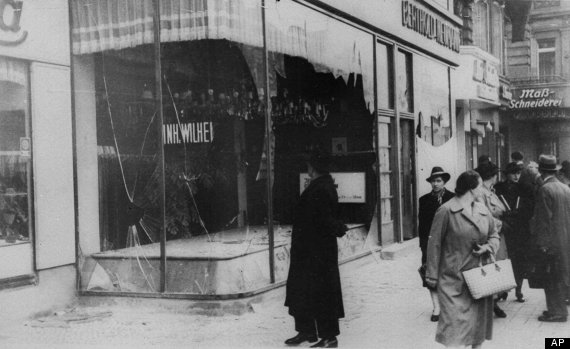
Above: the wreckage of a Jewish shop in Berlin, the day after Kristallnacht

From the Irish Times:

It took a month – and a pointed request from Dublin – for our man in Berlin to file a report on Kristallnacht, November 9th, 1938.

Now a Berlin synagogue destroyed 75 years ago in the so-called “Night of Broken Glass” is exhibiting Charles Bewley’s “disgraceful and unfathomable” report.

The 13-page document, condemning the “undesirables in the Jewish race”, is notorious in Irish diplomatic and academic circles. But a German curator expects it to cause “astonishment” when it goes on display for the first time on Monday in Berlin.

“That a diplomat let fly like this is singular, I’ve never seen anything like it and I’ve read a lot of reports,” said Dr Christian Dirks, curator of the exhibition of diplomatic dispatches on the 1938 pogrom.

After years of official harassment…

View original post 505 more words

@maybe1177

Design a site like this with WordPress.com
Get started